Renovation Day: House Makeover
- 4.6
- Rating
- 5.00M
- Installs
- Free
- Price

 Analysis by App-foxy
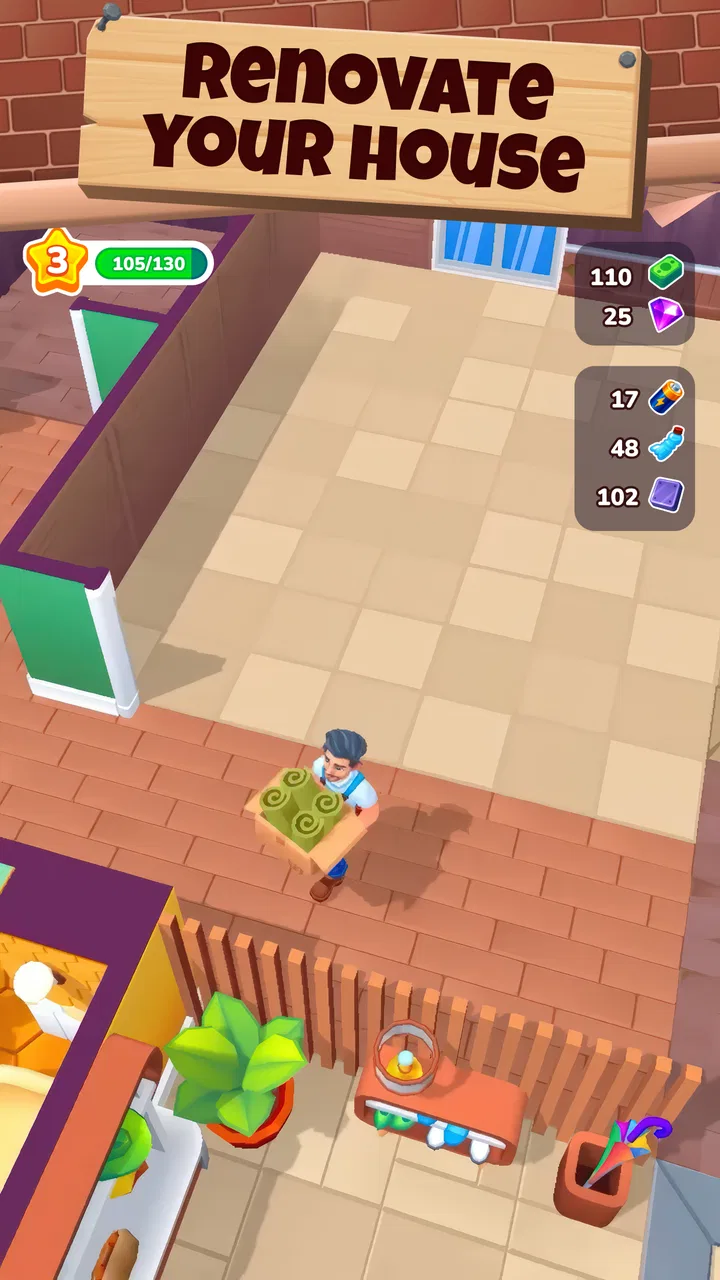
Renovation Day: House Makeover is the kind of role-playing game I open when I want a calm project rather than a demanding battle or a complicated strategy session. Its central idea is easy to understand: I work through house renovations, decide how rooms should look, and gradually turn empty or tired spaces into homes with more personality. That simple loop gives the game an inviting starting point, especially for players who enjoy decoration, light progression, and making visual choices.
What makes it appealing is the combination of small decisions and visible change. I am not just completing an abstract task; I can see a room move from a rough starting point toward a finished interior. The game is published by SayGames Ltd and sits in the role-playing category, although its role-playing identity is much lighter than what I would expect from a story-heavy adventure. It is better understood as a relaxed makeover game with progression elements than as a traditional character-driven RPG.
The store summary focuses on unpacking boxes, choosing interiors, renovating houses, and furnishing them in a personal style. In practice, that promise sets the right expectation: the attraction is the transformation itself. If you like arranging spaces, comparing visual options, and working toward a completed room, the concept is immediately understandable. If you want deep dialogue, tactical combat, or a large open world, this is probably not aiming at the experience you are looking for.
You May Also Like

 Blood Strike: 2.5 Anniversary
Blood Strike’s Loadouts Turn Every Drop Into a Tactical Gamble
A close look at Blood Strike’s custom loadouts: how fast access to signature weapons reshapes its battle royale rhythm, rewards preparation, and narrows the gap between fights.

 Pandora - Music & Podcasts
Pandora’s Music Is Easy to Start, but Harder to Recover
Pandora’s strength is its low-effort path from a seed to a station. Its weak spot is how much confidence it asks you to place in connection, setup, and quiet recovery.

 8 Ball Pool
 Is Built on Rivalries, Rematches, and Routine
A close look at the rivalries, rematches, shared routines, and unanswered safety questions that turn a quick pool match into a persistent mobile community.

 Samsung Music
’s Quiet Strength Is Playing What You Already Own
Its reach comes less from spectacle than from dependable access to a personal library. That simplicity is both the app’s strongest retention engine and its ceiling.

 AccuWeather: Weather Radar
AccuWeather Review: A Quick, Clear Forecast for Everyday Decisions
For everyday plans, the best forecast is the one you can understand quickly. AccuWeather makes rain timing, radar, and local conditions easy to act on, with a few trade-offs.

 Hill Climb Racing
Why Hill Climb Racing Still Turns Crashes Into One More Run
A tiny car, a bumpy hill and one more upgrade: Hill Climb Racing keeps resurfacing because its simple chaos makes every near-miss feel personal.
More From Our News Desk
View All News


How the renovation loop feels in everyday play
The most satisfying part of the game is the before-and-after rhythm. A room gives me a clear problem to solve, and each choice contributes to the larger makeover. That structure makes it easy to play in short bursts. I can complete a small piece of progress while waiting for an appointment, taking a break from work, or winding down before bed without needing to remember a complicated plot or manage a large collection of systems.
I also like that the decorating decisions give the progress a personal touch. Even when the available choices are guided, selecting an interior direction feels more involving than simply pressing through identical tasks. The result is not a sandbox where every detail is necessarily under my control, but it does offer enough visual decision-making to make the finished room feel connected to my choices.
A realistic use case is a player who has ten minutes free and wants something more active than scrolling but less intense than a competitive game. Renovation Day: House Makeover fits that moment well. I can focus on one renovation, make a few furnishing decisions, and stop after seeing a clear improvement. That sense of closure matters: the session feels complete instead of ending in the middle of a long mission.
The game also works for people who enjoy collecting a series of completed spaces. Each house becomes a small project, and the motivation comes from seeing the overall renovation journey develop. I found that this is more compelling when I treat the game as a visual checklist rather than expecting a dramatic narrative. The satisfaction is in finishing and comparing spaces, not in uncovering a complex mystery.
What the role-playing label means here
It is worth being precise about the category. This is not the sort of role-playing game where I build a party, study detailed statistics, or make branching story decisions. The role I play is closer to a renovator or interior planner. Progress is expressed through homes and rooms rather than through a conventional hero build.
That difference is important when deciding whether to download it. A player coming from large RPGs may find the experience quite light. Someone who wants a gentle sense of progression attached to decorating may find that same simplicity refreshing. I would recommend approaching it as a makeover game with role-playing flavor, not as a replacement for a traditional adventure RPG.
Three practical ways to get more from each session
My first useful tip is to decide on a room mood before choosing individual furnishings. Even when the game presents limited options, having a simple direction in mind—bright, comfortable, modern, or understated—helps prevent choices from feeling random. It also makes the final result more satisfying because the room feels like a deliberate project rather than a sequence of unrelated taps.
Second, I would avoid rushing through every decision just to reach the next renovation. The visual reward comes from noticing how the pieces work together. Taking a moment to compare options is especially worthwhile for players who care about interior style. The game is at its best when I treat each room as a small design exercise, not merely as a progress gate.
Third, short sessions are a strength rather than a limitation. I get more enjoyment by completing one focused task and stopping than by trying to force a long play session. That approach also makes the game suitable for casual use and reduces the feeling that I need to commit a large block of time before anything meaningful happens.
What you receive for free and where value becomes less clear
Renovation Day: House Makeover is free to download, so the initial decision is straightforward: I can try the core experience without paying an entry fee. That matters for this genre because the appeal depends heavily on whether the renovation loop matches my taste. A free starting point lets me judge the decoration, pacing, and presentation directly instead of relying on screenshots.
The game includes in-app purchases ranging from $3.49 to $99.99 per item. I see that as a reason to keep the first session exploratory. The free access is enough to decide whether the basic makeover structure works for me, while the paid options create a separate question about how much extra convenience or content I personally value. I would not treat the presence of purchases as a reason to pay immediately.
For me, the free value comes from the ability to experience the renovation concept and determine whether the visual progression is enjoyable. The paid value depends on the individual purchase and on how strongly I want to continue. Since the listed range is wide, I would be especially careful with the higher-priced choices and check the purchase screen closely before confirming anything.
This is also where the game differs from a one-time paid decorating title. A premium alternative may be preferable for someone who wants a clearly defined upfront cost and a more controlled purchase experience. Renovation Day: House Makeover is more suitable for someone comfortable starting free and deciding later whether continued play justifies optional spending.
Where the game earns its value
The strongest value is visual and emotional rather than mechanical. Completing a room gives me a small sense of accomplishment, and the house-by-house structure creates a reason to return. The game does not need an elaborate ruleset to be enjoyable if the player finds satisfaction in improvement, choice, and presentation.
It is also useful as a low-pressure creative break. I would not call it a full interior-design tool, because the game frames decisions within its own progression, but it does let me engage with color, furniture, and room identity in a playful way. That makes it a good fit for someone who enjoys home makeover videos, casual design challenges, or organizing spaces in other games.
On the other hand, the value drops if I do not care about cosmetic change. Players who need strong competition, complex strategy, or a story that keeps escalating may quickly feel that the loop is too narrow. The game’s appeal depends on enjoying the process of making a place look better. Without that interest, the free download may be worth a brief test but not a long-term commitment.
Trade-offs I would consider before spending
The first trade-off is simplicity versus depth. The accessible structure makes the game easy to pick up, but it also means the experience may not offer the layers found in more demanding management or design games. I appreciate the low barrier to entry, yet I would not choose it when I am in the mood for detailed planning or a complex economy.
The second is freedom versus guidance. Guided choices help the game remain approachable and keep the renovation moving, but players looking for complete control over floor plans, furniture placement, or every decorative detail may want a dedicated design simulator instead. This game is about making decisions inside a designed framework, not rebuilding a home from unlimited possibilities.
The third trade-off concerns spending discipline. Free access is helpful, but the presence of purchases up to $99.99 per item means I would set a personal limit before playing. Someone who prefers to avoid optional purchases entirely can still evaluate the free portion, while a player who dislikes seeing purchase prompts may find the monetization approach distracting.
I would also keep expectations realistic about the age rating. The game is rated Everyone, which matches its approachable makeover premise and makes it suitable for a broad audience. That does not mean every player will prefer it; it simply indicates that the tone and content are designed to be accessible rather than mature or intense.
Who will get the most from it
I think the best audience is made up of casual players who enjoy visible progress and decorative choices. If you like opening a game for a few minutes, completing a focused objective, and seeing a room improve, this is a natural fit. It is also a good option for players who find traditional role-playing games too demanding but still want a sense of progression.
It may appeal to people who play on a phone or tablet during small gaps in the day. The renovation theme gives each session a clear purpose, and the house format makes the overall journey easy to understand. I can imagine recommending it to a friend who enjoys makeover content but does not want to learn a complicated building system.
The game is less suitable for a player who wants unrestricted creativity. If your ideal experience involves placing every object manually, changing architectural layouts, or designing rooms with professional-level precision, a dedicated interior-design game will probably be a better choice. Likewise, fans of combat-focused RPGs should not download this expecting character progression, party strategy, or action-heavy encounters.
It is also not my first recommendation for someone who wants a single purchase with no ongoing spending decisions. The free entry is convenient, but the in-app purchase range means the experience is better suited to players who are comfortable evaluating optional purchases carefully. If you prefer a fixed-price game, compare the total value of a premium alternative before committing money here.
Device and access details that matter
The game requires Android 8.0 or later, so compatibility is worth checking before installing it on an older Android device. It is available at no upfront cost, and its Everyone rating makes it broadly approachable. The current version is 2.23.2, which is the version I would look for when checking whether my installation is up to date.
Its reach is significant, with more than a million installs and an average rating of 4.6 from roughly forty-six thousand ratings. Those figures suggest that the concept has found a substantial audience, although popularity should not replace personal testing. A player who enjoys decorating may respond very positively, while someone seeking a deeper RPG will still find the same fundamental limitation.
The game was released on May 21, 2024, and that gives useful context when comparing it with longer-established renovation titles. I would judge it primarily by how well its current makeover loop suits me rather than assuming it has the breadth of a mature simulation series. The developer, SayGames Ltd, has positioned it as an accessible mobile experience, and that focus comes through in the straightforward presentation.
My buy-or-skip verdict
I would recommend downloading Renovation Day: House Makeover if you want a free, approachable game about improving rooms and making furnishing choices. Its best quality is the clear visual payoff: I start with a space that needs attention and work toward something more finished. That is enough to make short sessions feel worthwhile, especially when I want a relaxing alternative to combat or competitive play.
I would skip it if I need a deep role-playing system, unrestricted interior design, or a purchase model with one obvious fixed price. The game’s category label may attract RPG fans, but its real strength is the makeover loop rather than traditional role-playing complexity. The optional purchase range also means I would play the free portion first and decide slowly instead of treating every offer as necessary.
My practical recommendation is to install it, complete enough of the early renovation experience to see whether the visual decisions hold your attention, and then set a spending boundary before considering any in-app purchase. That approach gives the free access a fair test while protecting the value of your budget. If the before-and-after transformation makes you want to keep going, the game can become a pleasant daily project.
Overall, I see it as a focused casual role-playing game for people who enjoy homes, furnishing, and steady visual improvement. It is not trying to replace a full RPG or a professional design simulator, and it should not be judged by those standards. Within its narrower goal, it offers an easy-to-understand renovation experience with enough personal choice to make each finished space feel rewarding. If your ideal mobile break is a small makeover with a visible result, this is worth trying for free before you decide whether it deserves more of your time or money.
FAQs for Renovation Day: House Makeover
01What is Renovation Day: House Makeover about?
Renovation Day: House Makeover is a simulation game where players take on the role of a home renovator. The game offers various challenges to redesign and decorate houses, allowing users to express their creativity. Players can choose from a wide range of furniture, colors, and styles to transform spaces and satisfy client demands.
02Is Renovation Day: House Makeover free to play?
The game is free to download and play, but it includes in-app purchases. These purchases can enhance the gaming experience by providing access to premium items, additional resources, or to skip waiting times. Players can choose whether to spend real money or enjoy the game using free options available.
03What are the system requirements for Renovation Day: House Makeover?
Renovation Day: House Makeover requires Android version 5.0 or later, or iOS version 10.0 or later. It’s recommended to have at least 2GB of RAM for optimal performance. Ensure that your device has sufficient storage space, as the game regularly updates with new content and features.
04Does Renovation Day: House Makeover require an internet connection?
While some features of Renovation Day: House Makeover can be enjoyed offline, an internet connection is necessary for accessing certain content, downloading updates, and engaging with social features like sharing designs or competing with friends. For the best experience, it’s recommended to play with a stable internet connection.
05How often does Renovation Day: House Makeover receive updates?
The developers regularly update Renovation Day: House Makeover to introduce new challenges, furniture sets, and seasonal themes. Updates may vary from monthly to bi-monthly, depending on the complexity of new features being added. Players are encouraged to keep the game updated to enjoy the latest content and improvements.
Pros
- Intuitive design with easy navigation
- Wide range of customization options
- Regular updates with new features
- Engaging challenges keep gameplay fresh
- Stunning graphics enhance user experience
Cons
- In-app purchases can be pricey
- Requires constant internet connection
- Occasional ads interrupt gameplay
- Some features locked behind paywall
- Limited offline functionality

Renovation Day: House Makeover
Gallery